A buyer pulls up Golden Valley on a Saturday morning, sees a median list price hovering around $450,000, and books two showings for the afternoon. The first is a two-bedroom condo a few blocks from Golden Valley Shopping Center. The second is a half-acre lot in Tyrol Hills with a mid-century rambler surrounded by homes listed well into seven figures. Same city. Same median price they started from. Two completely different transactions.
That whiplash isn't a fluke of timing. It's what happens when a single number tries to describe a city that stopped being one housing market a long time ago.
The Median Is an Average of Places That Don't Compete With Each Other
Golden Valley's citywide numbers move the way you'd expect for a first-ring Twin Cities suburb. As of July 2026, Movoto had homes listed to buy at a median price of $450,000, down about 3 percent from the month before and roughly flat with July of the prior year, with the typical listing spending 33 days on market. That's a reasonable, boring, useful number if you're comparing Golden Valley to Plymouth or St. Louis Park at a glance.
It stops being useful the moment you try to use it to size up an individual listing, because Golden Valley's housing stock isn't one product. Last fall, Redfin's citywide figures put the median sale price at $568,000, while the same data source showed Downtown Golden Valley, the condo- and starter-home-heavy pocket near the shopping district, selling at a median of $349,000 that same month. That's close to a $220,000 gap inside the same city limits, in the same 30 days.
The gap hasn't closed. In August 2026, a Redfin search filtered specifically for mid-century modern homes in Golden Valley turned up five matching listings at a median price of $402,000. In that same result set, a lot in North Tyrol Hills was marketed as being surrounded by other modern and mid-century homes priced well north of $1 million. A single filtered search, one category of home, and the spread still runs from the low $400,000s to seven figures depending on which streets you're looking at.
Why the City Can't Build Its Way Out of the Gap
Here's the part a median price will never tell you: Golden Valley isn't adding land. The city describes itself as fully developed, and its own planning pages are direct about what that means for new housing. New single-family homes happen one of two ways: an existing lot gets split, or an existing home gets torn down and rebuilt. New middle housing or multi-family projects happen through combining lots that already exist. There is no third option where a farm field on the edge of town turns into 200 new houses.
Lot splits run through the city's subdivision regulations, reviewed by the Planning Commission and approved by City Council. Tear-down and rebuild projects go through the Building Inspections Division as permitted construction, not as a rezoning fight. Both paths exist and both get used, but both are slow, one-parcel-at-a-time processes compared to how growth works in a developing outer suburb.
This is why the phrase "new construction" means something different here than it does in a place still platting subdivisions. When you see a newly built home in Golden Valley, especially along the Bassett Creek corridor where custom infill has been replacing older stock, you're not looking at fresh supply. You're looking at one older home that stopped existing so a new one could take its place. The net number of homes barely moves. What moves is the price of the lot underneath them, because buyable land in a built-out suburb behaves less like a commodity and more like a fixed asset that occasionally changes owners.
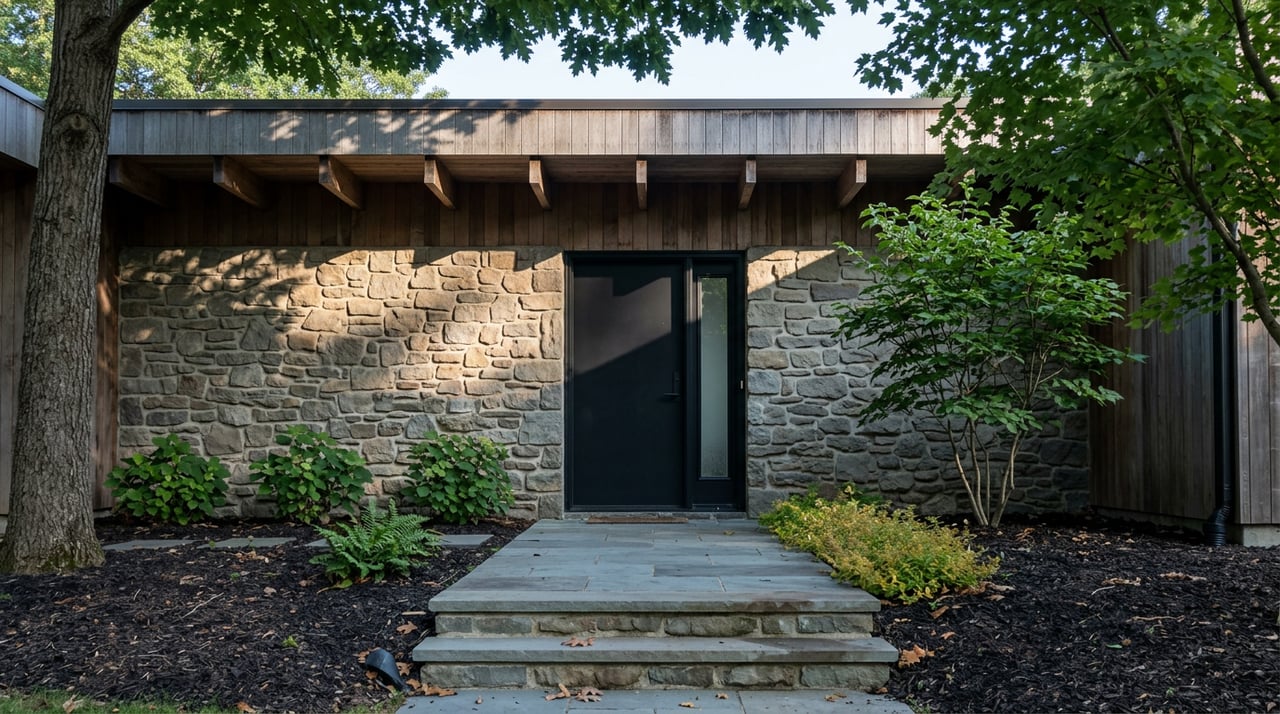
That scarcity is a big part of why the established pockets, Tyrol Hills especially, hold value the way they do. A 1962 rambler in South Tyrol Hills, renovated before being featured in a 2021 Star Tribune profile under the nickname its owners gave it, was listed in the neighborhood of $1 million on a wooded half-acre lot across from a pond near South Tyrol Park. The renovation leaned into a build-better-not-bigger philosophy rather than adding square footage, and the home was featured on the AIA's Homes by Architects Tour. That's not a fluke listing. It's what land scarcity looks like when it collides with a genuinely well-regarded architectural pocket.
What Golden Valley Actually Looks Like, Pocket by Pocket
| Housing character | What it means for a buyer | |
|---|---|---|
| Tyrol Hills (North & South) | 1940s-50s architect-designed Tudors and mid-century moderns on large, wooded lots, bordering Theodore Wirth Park | Prices commonly clear seven figures; you're paying for the lot and the pedigree as much as the square footage |
| Sweeney Lake / Hidden Lakes | Waterfront and near-water custom homes, some built by higher-end builders | As of July 2026, the sole active Sweeney Lake waterfront listing was priced at $1,350,000; small inventory makes any single sale a weak guide to the next one |
| Downtown Golden Valley | Condos, townhomes, and starter single-family near the retail core | Median sale price sat near $349,000 last fall; lower entry point, but a fundamentally different product than a Tyrol Hills rambler |
| Bassett Creek corridor | Newer custom builds and modern infill, largely the product of the teardown-rebuild process | Prices track current construction costs more than legacy land value; this is where "new construction" searches actually deliver results |
The point of the table isn't the exact dollar figures, which will keep moving. It's that these four pockets don't behave like variations on one theme. They're different products that happen to share a zip code, and a citywide median is the average of numbers that were never really comparable in the first place.
The Cost the Median Also Hides: What's Under the Roof
There's a second layer to this that rarely shows up in a listing description. Golden Valley's housing stock skews older, with a lot of 1940s-through-1970s ramblers in Tyrol Hills, Valley View, and Briarwood, and most of those homes are already on their second or third roof. As of June 2026, a standard asphalt reroof in Golden Valley was running $14,000 to $32,000. In Tyrol Hills and Briarwood specifically, where mid-century moderns often move toward premium materials like standing seam metal or synthetic slate as the original asphalt ages out, that number climbs to $25,000 to $45,000 or more.
That's a real number a buyer should be running alongside the purchase price, not after closing. A rambler priced right at the citywide median might be carrying a five-figure exterior bill that a newer Bassett Creek build simply doesn't have yet. The sale price tells you what the seller wants. It doesn't tell you what the house needs.
Two Questions Worth Asking Before You Trust Any Number
Is this listing in a pocket, or is it the city average? A price that looks high or low compared to "Golden Valley's median" might be exactly right for its specific neighborhood. Ask which pocket you're actually standing in before you decide the number is off.
Is this house original stock or a rebuild? Given how the city's redevelopment rules work, a home's build year tells you almost as much as its price. An original 1950s rambler and a 2020s teardown-rebuild on the same street are two different cost structures, two different maintenance timelines, and two different bets on the neighborhood.
Golden Valley rewards buyers who stop asking "what's the median" and start asking "which Golden Valley." The city isn't going to answer that question for you with a portal search. A local read of the actual pocket, the actual build year, and the actual condition behind the listing photos will.
If you're comparing Golden Valley against other west metro suburbs, or trying to figure out what a specific pocket like Tyrol Hills or the Bassett Creek corridor would actually cost you to buy into, SellingMinneapolis can walk through the real numbers for the streets you're actually considering. Get your instant home valuation and let's talk about which Golden Valley makes sense for you.